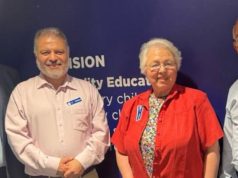

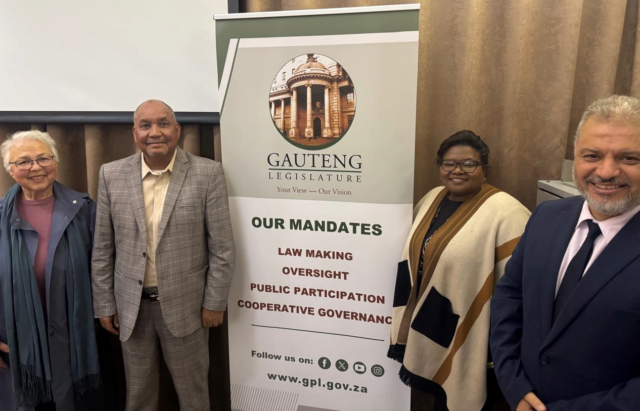
During early to mid-June, the Pestalozzi Trust held a series of constructive engagements with public representatives in Gauteng, the Western Cape and at national level. These meetings formed part of the Trust’s ongoing work to ensure that home education is regulated in a way that is lawful, practical, child-centred and respectful of families.
The Trust engaged with Hon. Sergio Dos Santos (DA MPL and Shadow Minister of Education in Gauteng) and Bishop Dalton Adams, ACDP MPL and Chair of Chairs in the Gauteng Provincial Legislature. In the Western Cape we met with Hon. Ferlon Christians (ACDP) MPP and Hon. Grant Marais MPP (Freedom Front Plus) of the Western Cape Provincial Parliament, and Hon. Steve Swart MP and Hon. Wayne Thring MP (Deputy- President) of the ACDP at national level. We are grateful to these public representatives for the time they took to meet us and their attentive engagement.
The Pestalozzi Trust interacts with public representatives across the political spectrum. Home education concerns children, families, parental responsibility, educational freedom, administrative justice and the right to basic education. We are therefore grateful when any public representative is willing to listen carefully, ask questions, and help ensure that the real experiences of home educating families are heard.
We are especially grateful to former MP Marie Sukers, now of Voice to Parliament, who has worked consistently to ensure that the voices of home schoolers are brought into public and legislative discussions. Her support has helped open doors for these meetings and create opportunities for home education families to be heard in spaces where decisions are made.
The meetings provided an opportunity to explain the practical difficulties that many home educating families have experienced since the implementation of the BELA Act amendments to the South African Schools Act. They also allowed the Trust to raise broader policy questions about how home education, collaborative home education, interim home education and independent micro-schools can contribute to South Africa’s educational landscape.
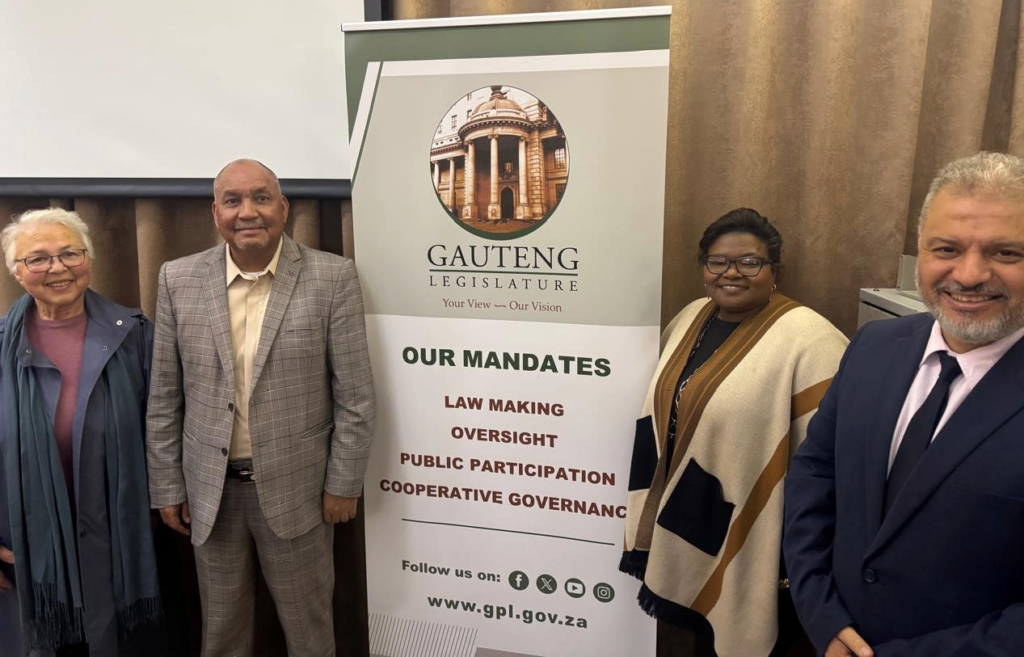
Karin van Oostrum (Pestalozzi Trust); Hon. Bishop Dalton Adams, ACDP MPL and Chair of Chairs in the Gauteng Provincial Legislature; former MP Marie Sukers, now of Voice to Parliament; Christopher Cordeiro (Pestalozzi Trust)
Registration
The most urgent concern remains registration.
The BELA Act came into operation on 25 December 2024. This meant that the initial 30-day application period fell over the festive season, when many Provincial Education Departments were closed, partially closed or operating at reduced capacity. Many families nevertheless tried to comply. The difficulty is that, in several provinces, the administrative systems were not yet ready, and departments have struggled to catch up with registration. Over a year later many families are still waiting for certificates and registration numbers.
This is precisely why the 60-day deemed registration provision is so important. Where a parent has applied and the Department does not respond within the statutory period, the application should be treated as approved by operation of law, providing the parents has proof the application was made. The purpose of this provision is to prevent children and families from being prejudiced by administrative delay. It is not meant to become a new obstacle or a reason to restart applications.
The Trust has therefore emphasised that applications older than 60 days should not be treated as fresh applications. Families should not be asked to restart the process simply because a department has not processed the paperwork. Where proof of application exists, the learner should be recorded as registered, and a certificate or registration number should be issued immediately.
Our 2025 registration survey showed that many families had still not received a clear approval. Nationally, only 19.51% of respondents reported receiving notice of approval, while 34.45% reported no response from the Provincial Education Department. A further 45.87% reported “another response”, which often still left families uncertain about their status, as they never received a clear final outcome.
The Trust shared this research with the public representatives with whom we met. We explained that the figures are indicative and have methodological limitations, but that they are more than sufficient to show a serious implementation problem that requires oversight and proper departmental reporting. We also made clear that the Trust intends to conduct further research in July/August, when registration activity is expected to pick up again. This follow-up research will help determine whether provincial departments have made progress, whether certificates are being issued, whether deemed registration is being recognised, and where families remain stuck.
The Trust has therefore raised the need for regular reporting on home education. Without proper figures, it is not possible for Legislatures, Committees or the public to know whether the system is working.
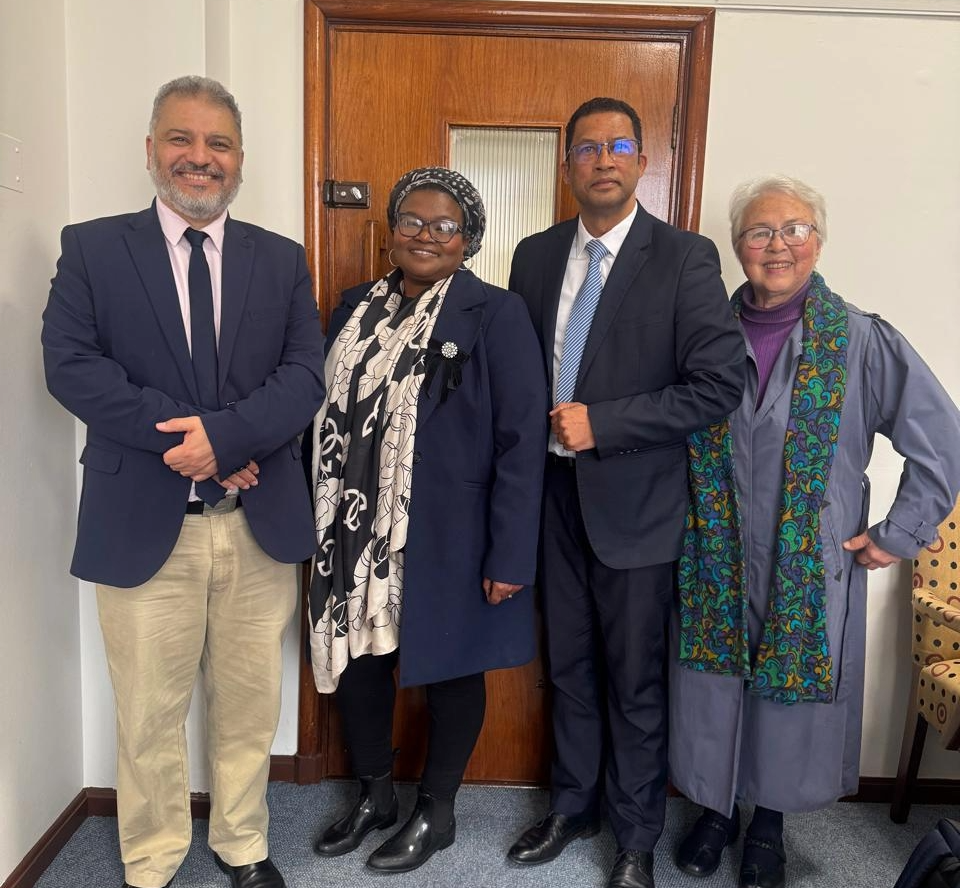
Christopher Cordeiro (Pestalozzi Trust); former MP Marie Sukers, now from Voice to Parliament; Hon. Grant Marais MPP (Freedom Front Plus) of the Western Cape Provincial Parliament; Karin van Oostrum (Pestalozzi Trust)
Assessment
A second urgent issue is assessment. Many families are now reaching the end of phases. Some learners using international curricula, including Cambridge pathways, reach important transition points at different times of the year. Other learners will reach phase-end later in the year. Families need clear, written and public guidance on what is expected of them.
The Trust has stressed that assessment guidance cannot be left to informal meetings, individual emails or verbal explanations. Parents need further official written guidance from Departments so that all families receive the same information and can plan responsibly. The Trust has also raised concern that notification and assessment should not be unlawfully turned into a re-registration process. Families who are already registered, or deemed registered, should not be placed in a position where unclear assessment requirements are used to interrupt lawful home education.
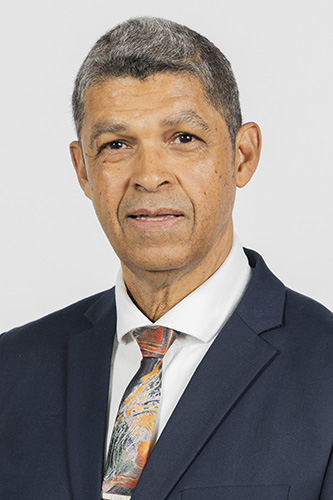
Hon. Wayne Thring MP (Deputy-President of the ACDP at national level)
Interim home education
The discussions also dealt with interim home education. Interim home education refers to situations where a child is educated at home temporarily because a suitable school place is not available or placement is delayed. These families are not home educators by choice. They are responding to a failure of school placement or capacity. For this reason, interim home education should be treated as a distinct category and receive support to access public schooling as soon as possible.
These learners should not become invisible. Departments should know how many learners are temporarily at home because of placement problems, how long they have been in that position, what support is being provided, and what steps are being taken either to place them in a school or to assist the family if they choose to continue with home education lawfully. Interim home education should not be used to hide school-place shortages, but it may be a necessary temporary mechanism to protect a child’s right to education while a placement issue is being resolved.
If interim homeschooling is treated like home education the risk is that many school-like features which are very suitable if you are waiting to get your child into school could end up being applied to long-term home schoolers.
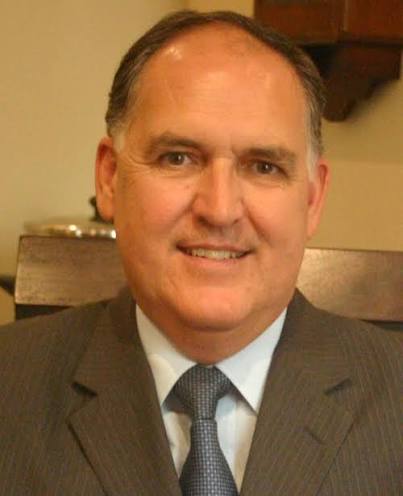
Hon. Steve Swart MP, ACDP
Collaborative home education
Collaborative home education was another important theme.
Home schooling families do not operate in isolation. Parents may work together for outings, science activities, debate, sport, music, languages, mathematics support, co-operative learning days, practical subjects or social activities. Some families jointly arrange tutors or specialist support while each parent remains responsible for the education of his or her own child.
The Trust’s position is that collaborative home education should be recognised as a lawful and positive feature of home education. It can strengthen education, reduce isolation, support parents and broaden children’s opportunities. At the same time, it needs to be distinguished clearly from an independent school or commercial micro-schools. The key distinction is parental responsibility: in genuine collaborative home education, educational responsibility does not transfer from the parent to a school, centre, organiser or business.
Proper recognition of collaborative home education would help families and officials. It would prevent the misunderstanding that parents may not work together. A balanced framework should allow families to co-operate, share resources, use tutors for specific subjects and support one another without being forced into inappropriate regulatory categories.
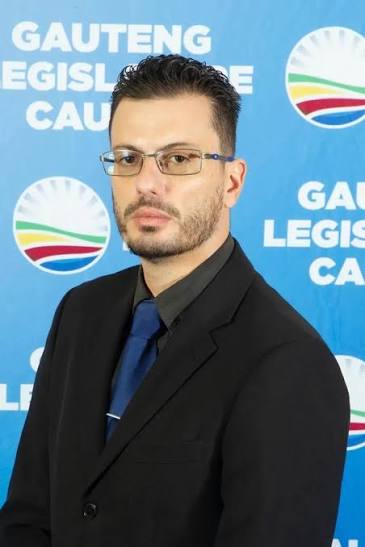
Hon. Sergio Dos Santos (DA MPL and Shadow Minister of Education in Gauteng)
Independent micro-schools
The meetings also touched on independent micro-schools. Independent micro-schools are not the same as home education. They are small, community-based educational settings that may provide another lawful option in areas where school places are under pressure or where families need smaller, more flexible learning environments. The Trust believes that these models should be explored carefully, with proportionate regulation.
They form part of a broader educational ecosystem, especially where communities, parents, retired educators, tutors or subject specialists are willing to help expand access to quality education. In some areas, retired mathematics and science teachers could play a valuable role in supporting collaborative groups, micro-schools, learning recovery programmes or subject clinics.
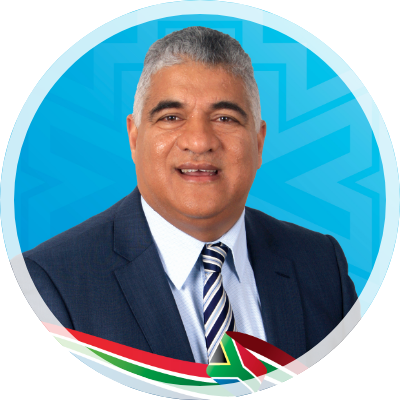
Hon. Ferlon Christians (ACDP) MPP
Continuing engagement
Taken together, these engagements showed that home education is no longer a marginal issue.
The Trust will continue to engage constructively with public representatives, departments and officials. Our focus remains clear: families should not be trapped in administrative uncertainty; the 60-day deemed registration provision must be implemented; assessment requirements must be clear, lawful and publicly communicated; and South Africa should develop practical frameworks for home education, collaborative home education, interim arrangements and small-scale independent education settings.